Improving Your Spiritual Relationships Using Therapeutic Strategies

You are a spirit. The other intelligent beings you interact with, including plants and animals, are spirits. Every time you connect with a spirit, whether they are embodied or not, you have a relationship with them. Sometimes, those relationships can go sideways. This blog post explores some of the reasons why and some of the ways how you can improve your relationships through personal reassessment.
Recently, I spoke with Apollo, my original guiding deity, for the first time since our previous dynamic had ended. In a way, this conversation was a point of repair, even as there never had been any grudges held on either side. However, maybe that underlying tension was why I wanted to ask him specifically why I had noticed so many other people in close deity relationships have reported having a lot of interpersonal problems with them.
"Our [deities'] relationships with people differ because other individuals view us in their ways and you view us your way," Apollo had answered.
"In what way do I view you?" I asked.
"As helpful."
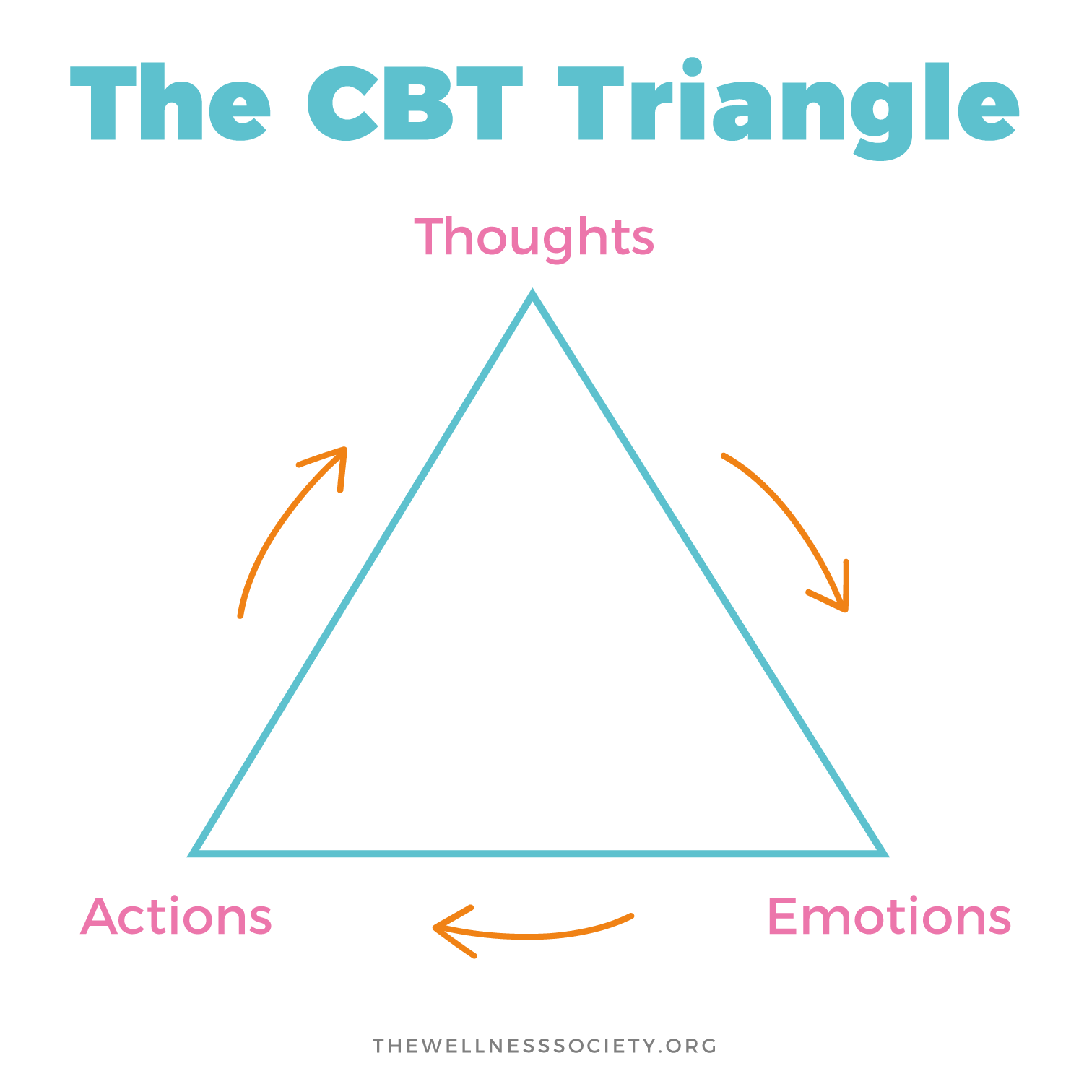
In relation, with Cognitive Behavioral Therapy (CBT)—the therapeutic modality that has one of the largest evidence bases for effectiveness—there is something that practicing behavioral health professionals and their clients are taught called the "cognitive triangle." The triangle illustrates the idea that thoughts lead to feelings, which then lead to behaviors (called "actions" in the below image). There is a spin off modality of CBT that treats people who have experienced trauma, called Dialectical Behavioral Therapy, which follows a similar foundation, but also targets beliefs associated with the feelings. That would make the triangle a rectangle—thoughts lead to feelings, which relate to underlying beliefs, and then that entire speedy process activates a behavior.
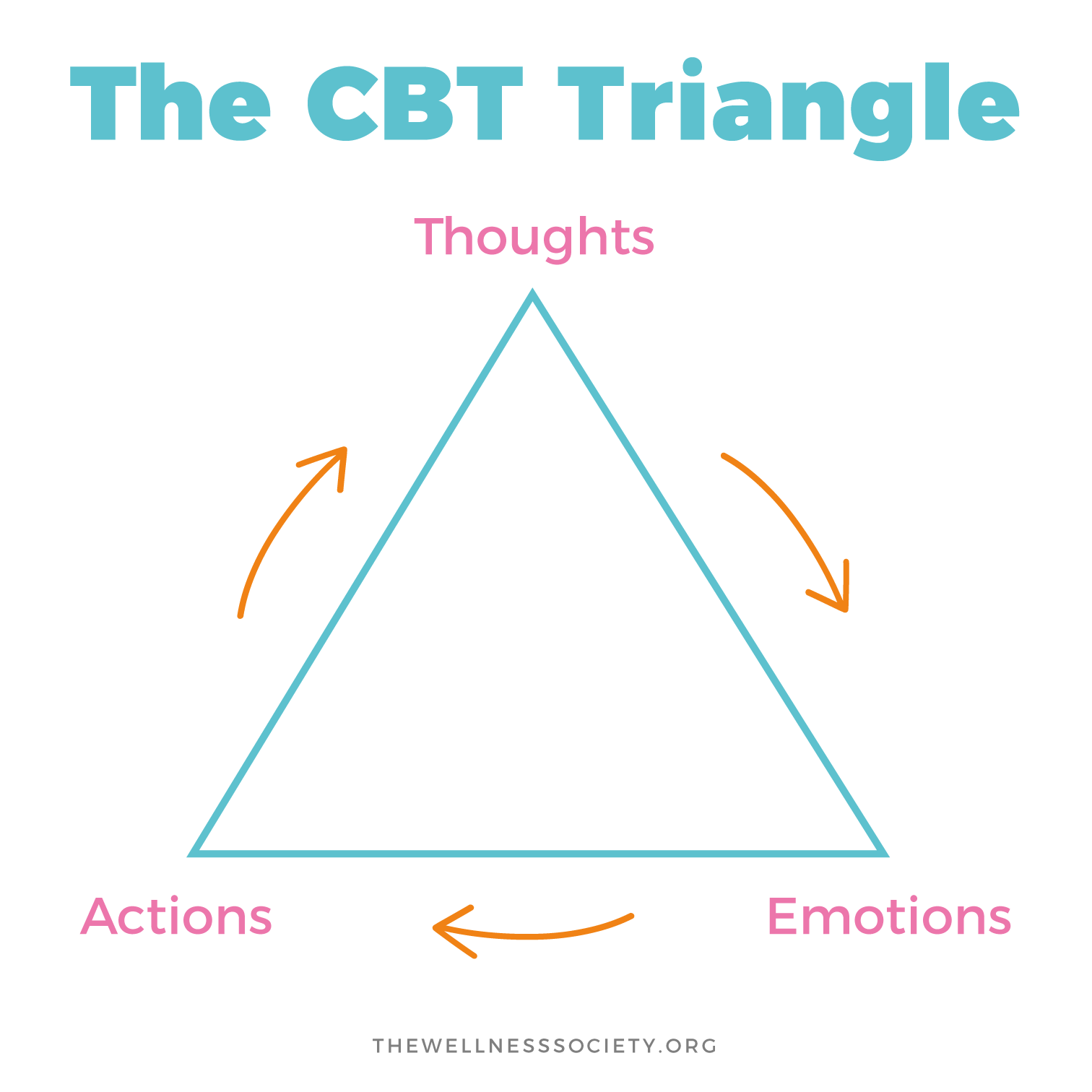
Furthermore, behaviors have consequences. When practicing CBT, the goal of the professional and client is to understand what the client is thinking and feeling that leads to behaviors that then have consequences. Consequences can be positive or negative; however, usually a client is attending therapy due to a need to make changes. Understanding what consequences are unwanted and all the thoughts, feelings, and behaviors that lead up to them helps with detecting where and how those changes can be made.
This blog post is not just about addressing relationships with gods and other metaphysical spirits. However, we can assume that thoughts or beliefs about gods/spirits influence our approach to them, which leads to related consequences. If those consequences are frequently experienced as negative or unwanted, there is an issue of mental or spiritual health at play for the human individuals involved. Something in the dynamic probably needs to change. As CBT teaches, you cannot change the other people involved in the scenarios causing distress. You can only change yourself and your own thoughts, feelings, and behaviors.
I am not going to put myself on a pedestal when it comes to relationships of any kind, mundane or mystical. I have definitely had my fair share of conflicts with other humans in the past. But I am going to say that I generally have had pretty positive relationships and minimal stressors with spirits I establish ongoing contacts with (knock on wood 😆). The rest of this post outlines a couple of basic tenets I follow to keep them that way.
- Do Not Ascribe Negative Qualities to the Other
This one is a funny one because I am a devil worshipper. I experience Lucifer as so kind and warm toward me that I frequently forget that most people ascribe literally everything bad about the world to him. Technically, it's supposed to be part of his lore... But because I believe that almost everything humans describe as "evil" from an Abrahamic standpoint is actually "ignorance" per the Hindu and Buddhist tenets, I just don't factor it into my relationship with him at all. Maybe because of this, the only time his Devilness ever comes up is when he's peacocking or teasing me.
I prefer my attitude toward Lucifer to be this way because then there is no underlying assumption that he is "bad." Because if I think that he is "bad," then it stands to reason that I don't feel that I can trust him, and if I feel that I can't trust him then I may believe that I am in a relationship with an entity who may not have my best interests in mind. Resulting behaviors from this thought-feeling-belief line may include me picking fights or making decisions against his in order to attempt to protect myself. This happens in relationships with humans and other beings as well. If you assume your partner is selfish, you may have similar feelings of lack of trust within the relationship, and if you don't talk about it and work it out, it may lead to behaviors, such as fighting, withholding intimacy, and other ways of expressing resentment. It is better to to not hold the assumption that the other party is out to get you, or literally evil, and try to understand what their reality actually is so you can ideally work on improvements in your relationship together.
I am not going to pretend that this is easy for me, given the types of spirits whom I'm close with and the stigma that surrounds them. Sometimes, you need to locate evidence, as CBT often encourages in order to dispel what are called "cognitive distortions." My evidence for why my relationships with these entities are positive include that they have helped me secure housing, additional funds, animal and human companions, and classes with better professors so that I can maximize my educational experience. All of those things are conducive toward my having a good life and achieving my goals. If that is what your partners or allies of any kind do for you, even if conflict sometimes occurs, generally that means they are worth giving the benefit of the doubt when they make mistakes and keeping in your life.
- Improve or Limit Your Storytelling
This is one of the first incredibly useful things I learned about Buddhist teachings from a now-fellow Buddhist. It also plays directly into where CBT tries to intervene in order to create change for people who practice it.
"Storytelling" is the tendency people have to ascribe meaning throughout their thought processes which do not necessarily have a strong basis. This is best illustrated through an example, which I am going to offer using my cat Sofia.

Lucifer located Sofia for me and helped me obtain her over half a year ago as of this writing. While I have had dogs my entire life, she is my first cat. I have found since starting my life with her that cleaning the litterbox is one of the chores that I hate most in the world, but having a housecat and living alone obviously means I must do it regularly.
So when I clean the litterbox, this is the process that often occurs internally with thoughts and feelings: I hate this, this is disgusting. No matter what I do litter gets somewhere new and I have to vacuum or wipe something else down. If that's happening, I must be cleaning this wrong. If I am not good at this, this means I am a bad cat parent. I'm sure Sofia can sense this and because of it, doesn't love me. I clearly should not have a cat if I am a bad cat parent. Lucifer got me this cat so that means he's not looking out for my best interests, which means my relationship with him is bad... And on and on and on.
The bolded line is where CBT starts its intervention and says, "Wait, what about cleaning the litterbox being an arduous experience means you're a bad cat owner? Didn't your cat jump up on the bed with you the other day and put her paw on you as she joined you for a nap? Doesn't she meow every time you enter the room she's in for your attention? Haven't you had multiple conversations with her vet for the last number of months and have bought expensive food and medications in order to try to treat her ongoing allergies?
"What if you changed the story?" Okay, I clean the litterbox even though I hate it because I love my cat and I am being the best cat parent I can be. Other problems I have with my cat can be resolved, whether its replacing the Litter Genie with a better alternative, obtaining those pet communication buttons so we can establish trust, or asking other cat parents for advice.
Or, I can drop the storytelling entirely! Guess what happens if I just stop following the direction of this thought process and focus on cleaning the litterbox, the same way Thich Nhat Hanh in one of his books advised just being present as you wash the dishes? I feel a lot better and the litterbox still gets clean.
Almost every human tells stories about their lives. Make sure you are telling the right ones about yourself and your experience, if you choose to continue.
- Remember That Everything is through Your Perception
I had a bit of an annoying experience with someone recently. We were meeting for the second time ever and this was the first time we both discovered that we are pagans, of the variety that tends to have more personal relationships with deities. After I told them that I had my connection with Lucifer, they were able to perceive him with me—it is often and almost always the case that people are only able to realize his presence after I verbally alert them to the fact. This is probably to keep the human mind safe and functional; having been in periods where I did not have such filters and could hear trees talking to each other without intentionally tapping into them, I can tell you that it is not at all fun nor helpful to be in a state where you pick up all energetic activity currently occurring.
This person shared that they had pre-existing negative sentiments toward Lucifer. They proceeded to tell me, "He has a message for you, but is using the wrong pronouns."
They did not seem to realize it was hurtful to imply that my companion of about a year would not respect my pronouns, or that I would put up with it. We don't know much about the existence of spirits for certain, but many spiritual traditions assume they primarily exist in a different realm than ours. In relation, I must deign to point out that Lucifer does not have a brain, vocal chord, mouth, nor tongue. So when people pick up messages from spirits, it is purely through our imaginative faculties. That is why experiences of spirits may not always be consistent between two different people. It also explains why psychic senses can be strengthened through visualization exercises, such as advised in Mat Auryn's book Psychic Witch. It's not that Lucifer literally spoke English and used the wrong pronouns for me. It's that the recipient of the message had a basis of not trusting him and their English-speaking brain filled in a pronoun—hopefully one that was not reflective of how they, another trans person, perceived my gender—where it needed one in order to make the message comprehensible.
Again, even the mundane is filtered through our perceptions. Cognitive distortions are descriptions of common ways our perceptions can be unhelpful to us. It is usually not our fault if we have never "gone meta" and thought about our thoughts to realize how they are shaped and how they are affecting us. But it is our responsibility to understand that our reality is subjective and to allow space for others'.
This point circles back in many ways to my first. Refrain from making negative assumptions where you can. Give others the benefit of the doubt. Treat other people well. Otherwise...
- Please Have Boundaries
The final point: if someone of any kind is causing you more difficulty than they are gain, that is your cue to set boundaries.
In talking to friends who share similar restorative and community-based values with me, we have come to an agreement. Sometimes people who have a lot of interpersonal drama do so because they actually love the drama. This is sometimes because they grew up in households where a lot of fighting was normalized. Sometimes as consequence to this, or otherwise, the drama boosts these people's endorphins and makes their lives seem less boring. Other times, they want attention, approval, feelings of importance, or even have the need to make a living as related to the drama when sharing it with others. I can admit that at one point relatively recently, some of these motivations played into my having not-ideal interpersonal behavior. Witnessing this happening with other people in my life led to the conversation with Apollo at the start of this blog post. Even if you're not a direct part, it can be really draining without initially realizing it to see these dynamics play out over and over again.
Setting oneself on true restorative communication, community-building, and having healthy relationships means abandoning any love for drama you may have had previously. It means knowing what your standards and goals are and explicitly telling the humans or other intelligent spirits in your life that they must help you meet them. It means having tough conversations, "When you did A, I felt X, which led me to responding with Y. In the future, it would be helpful for me and the trust in our relationship if instead you did B."
For instance, this is one I had recently: "When you responded with me not wanting to do something for you with 'you have to because I told you to,' I felt triggered and very destabilized because it reminded me of the first three decades of my life where I was fully controlled by my parents. I do not feel capable of reacting in anyway that isn't self-protective under those circumstances and it hurt my trust in our relationship. In the future, if I say I don't want to do something, please try to approach with curiosity and help me explore why instead of trying to force me into what you want me to do." Because this message was received with genuine remorse, understanding, and willingness to change behavior, I continued the relationship.
This, unfortunately, is not always the case. Sometimes you experience hurt and even have a conversation about it. The other party indicates that they understand, but then they do it again. And again. And again. Whether it's due to endorphin-cycling, being invested in some kind of storytelling, or some other motive or need with one involved party or both, the second violation is enough. At some point, it is being a responsible and emotionally mature person to have the self-awareness to know where you must advocate for yourself. You know you are appropriately self-advocating when you limit or end such a relationship.
An additional note on deities for those who may need it: contrary to the Abrahamic conception many of us grew up with, not every tradition nor person perceives deities as all-good, all-benevolent, all-loving, or perfect. There is also, evidently, a variation on how personal a human being's relationships with beings who are so vast can be. That said, this is objective fact: gods are not humans.
The most successful relationships with humans and deities I have seen—including those that involve godspousing, whether or not everyone wants to believe such a thing—is when the human understands this. They do not expect that the god is going to behave like a human. They trust that even if the god does something hurtful to them in a moment it likely is to lead to a higher good for them in the long-term, and often truly experience difficult incidents as involving larger pay offs. They understand their relationships as being the base for important spiritual functions, not just for themselves, but crucially for other people outside the relationship. They also realize that the gods can make mistakes and there are pathways toward reparation.
If you enter into a dynamic and let it be led with self-indulgence, I personally believe that this is extremely short-sighted. While deities and spirituality can and do provide comfort, this is not the main reason why they should be in your life. It is inevitable that throughout your limited time here on earth you will be forced to grow and change. The more you embrace this, and understand that growing and changing inherently involves bettering your relationships with and improving the circumstances of other sentient beings of all stripes, the easier time you are going to have. If this understanding is not accomplished, the challenges will come from within your relationship with the deity, or other spirit, instead.
I hope this blog post reaches those who need it. Be well and remember the golden rule: treat others how you want to be treated.